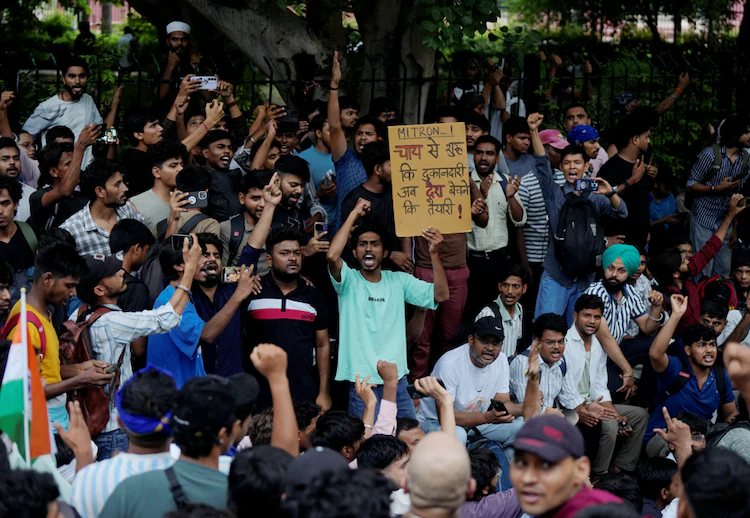
India’s Cockroach Janta Party (CJP) and numerous others are expected to stage a protest in and around the Parliament complex in New Delhi on Monday, July 20, with the monsoon session of the Parliament underway through August 13.
With large crowds of lawmakers, media personnel, security staff and citizens likely to remain outdoors at various points during the day, weather conditions could play a key role in how events unfold.
The day is set to mark a sudden shift from the rainless, humid conditions that have persisted in Delhi-NCR in the past days, with the IMD warning of a possible return to monsoon conditions.
RAIN COMING AFTER NOON
The IMD has forecast the maximum temperature between 34-36°C, while the minimum is expected to remain around 26.8°C.
South-easterly winds in the morning are expected to shift southwesterly and then westerly later in the day, with wind speeds of 15-20 kmph.
The weather office has also indicated that maximum temperatures across Delhi are likely to fall by 3-5°C over the coming days as monsoon conditions strengthen over northwest India.
The monsoon trough, which is a broad low-pressure belt that draws moisture-laden winds from the Bay of Bengal and the Arabian Sea, is currently passing through Delhi, creating favourable conditions for showers.
WHY IS DELHI’S WEATHER CHANGING?
On Monday, the IMD said this trough is passing through Delhi, creating favourable conditions for cloud cover, rain and thunderstorms.
At present, the trough passes close to Delhi through Muzaffarnagar, while upper-air cyclonic circulations over North Punjab and East Uttar Pradesh are adding moisture and instability to the atmosphere.
Together, these systems are expected to trigger widespread cloud cover and rainfall across the capital and surrounding regions.
For those heading to Parliament or commuting across the city, intermittent rain, brief thunderstorms and strong winds could slow traffic and reduce visibility.
While the IMD has not yet issued any impact-based warning for Delhi for Monday, residents are advised to remain alert during thunderstorms, especially in open areas.
– Ends