More than half a century after the Apollo era ended, the Moon is once again at the centre of a geopolitical contest, this time between the United States and China.
As US President Donald Trump and Chinese President Xi Jinping engage in high-stakes diplomatic talks in Beijing amid growing tensions over trade and technology, another rivalry looms quietly in the background: who will return humans to the Moon first.
The modern-day Moon race is no longer just about planting a flag. It is about technological supremacy, military influence in space, access to lunar resources, and shaping the rules that could govern the next era of exploration.

DOES US HAVE THE EDGE IN THE MOON RACE?
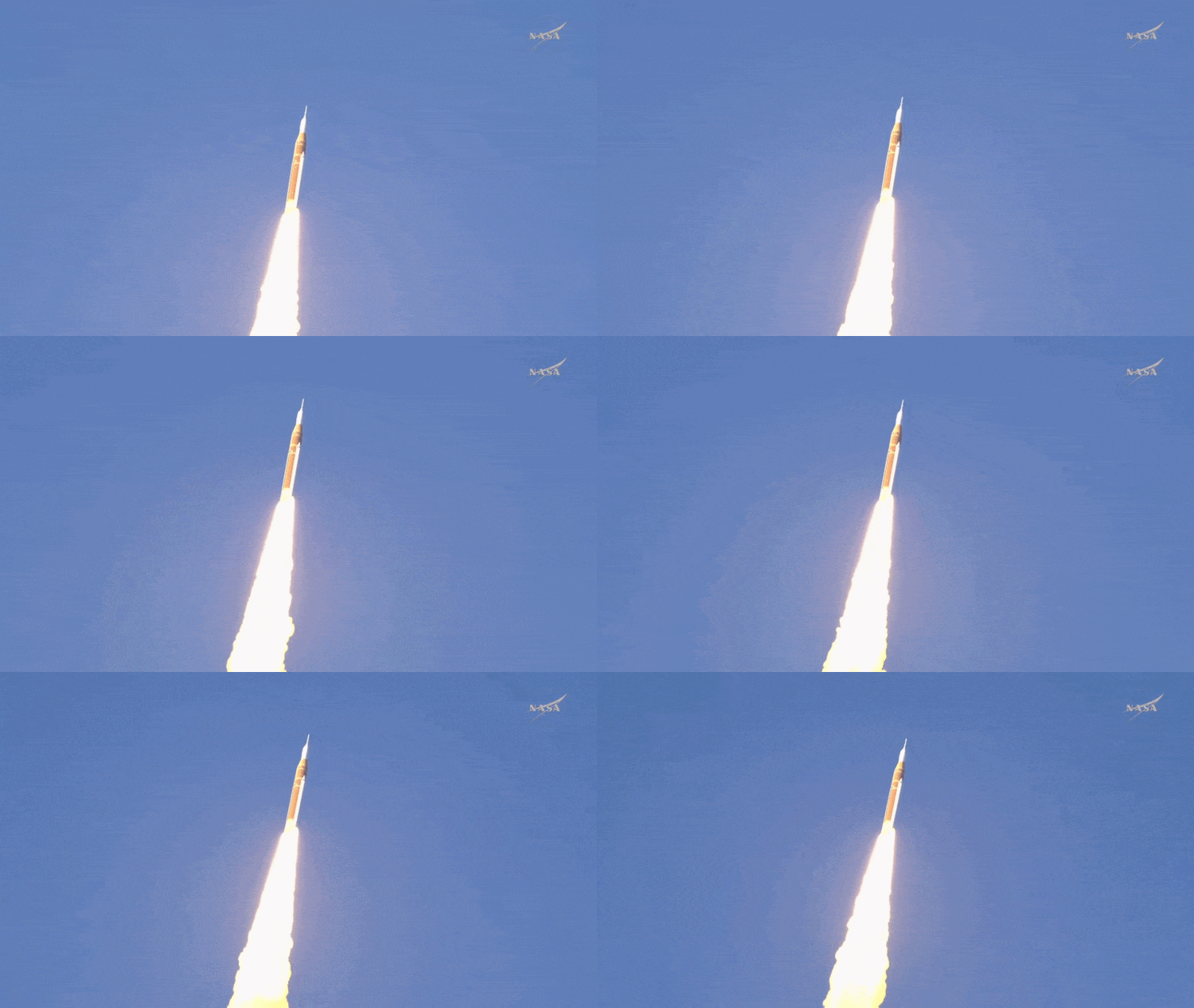
The United States, through Nasa, is leading the Artemis programme, an ambitious effort aimed at landing astronauts near the lunar South Pole before the decade ends.
Nasa recently launched and conducted the first human flyby around the Moon with Artemis-II as four astronauts flew furthest from Earth to test and validate the Orion spacecraft that is tasked with landing humans on the Moon in the near future.
Trump, on multiple occasions, has indicated that they will attempt a lunar landing before his presidency ends. Nasa not only has resources, but also experience behind it to propel it for that critical juncture.
Nasa’s urgency to beat China is rooted in both prestige and strategy. American officials have repeatedly warned that whichever nation establishes a sustained presence on the Moon first could gain a major advantage in future space operations.
The lunar south pole, in particular, has become a prime target because scientists believe it contains large amounts of water ice trapped inside permanently shadowed craters. That ice could eventually be converted into drinking water, breathable oxygen, and even rocket fuel.
The US fears that if China reaches the region first and builds infrastructure there, it could dominate access to critical lunar resources and shape international norms in ways favourable to Beijing.
Nasa Administrator Jared Isaacman has openly framed the competition in Cold War-like terms, arguing that the US must ensure China does not gain strategic control over key areas of the Moon.
WHERE IS CHINA?
China, meanwhile, is moving rapidly with its own lunar plans through the China National Space Administration, with Beijing targeting a crewed Moon landing by 2030.
While China rejects American claims, Beijing has steadily expanded its capabilities. The country became the first nation to land a spacecraft on the far side of the Moon in 2019 with the Chang’e 4 Moon Landing mission and has successfully returned lunar samples to Earth through Chang’e 5.
China is also developing the Long March 10 rocket and a new-generation spacecraft designed specifically for lunar missions. Alongside Russia, Beijing plans to build an International Lunar Research Station in the 2030s.
The US, however, still holds significant advantages. Nasa’s Artemis programme has backing from multiple international partners through the Artemis Accords, including India, Japan, Canada, and European nations.
The programme also benefits from private-sector support led by SpaceX, whose Starship rocket is expected to serve as the lunar lander for Artemis missions.
Yet America’s path is not without problems. Artemis has faced repeated delays, cost overruns, and technical hurdles. China, on the other hand, has gained a reputation for meeting ambitious timelines with steady progress. Case in point, the way they built their Tiangong Space Station within years of planning and prepping for it.
The outcome of this new Moon race could define not only who lands first, but who leads humanity’s future beyond Earth.
Unlike the Apollo era, this competition is not expected to end with a single mission. The winner may instead be the nation that can stay on the Moon and build the foundation for reaching Mars and deeper space.
– Ends