


Stepping out of the Bombay local and into the slow-moving gravity well around Lollapalooza Mumbai 2026, my body clock recalibrated before my brain could catch up, already budgeting for the hours of standing, waiting, and micro-adjustments that music festivals demand. The approach to Mahalaxmi Racecourse offered barely any orientation; just wide, exposed ground broken up by scaffolding, LED towers, and human bottlenecks, with movement reduced to cautious diagonals negotiated through eye contact and the shared understanding that everyone was conserving something they’d need later.

Day One kicked off at full volume, hip-hop dominating the early stretches of the day as bass travelled across the racecourse in dense, physical waves, and what made it genuinely trippy was how the sound kept mutating as I walked. The low end thinned or thickened depending on where I stood, beats bleeding into one another the way background music shifts when you cross invisible boundaries in a video-game map, one zone giving way to the next without warning; all of it creating the disorienting sense that the festival was spatially alive, constantly reprogramming itself around your movement.
It was all Fujii Kaze soon, as I approached closer towards the H&M stage. With a piano, a steady posture, and an unhurried sense of timing, the J-pop star seemed to slow people who had spent most of the day bracing themselves, with Shinunoga E-Wa soon drifting outward as phones came up almost reflexively and voices followed without strain. Even with sound issues tugging at the edges of the mix, the set held its shape. It didn’t feel exactly pristine, but it was intimate, and that mattered.
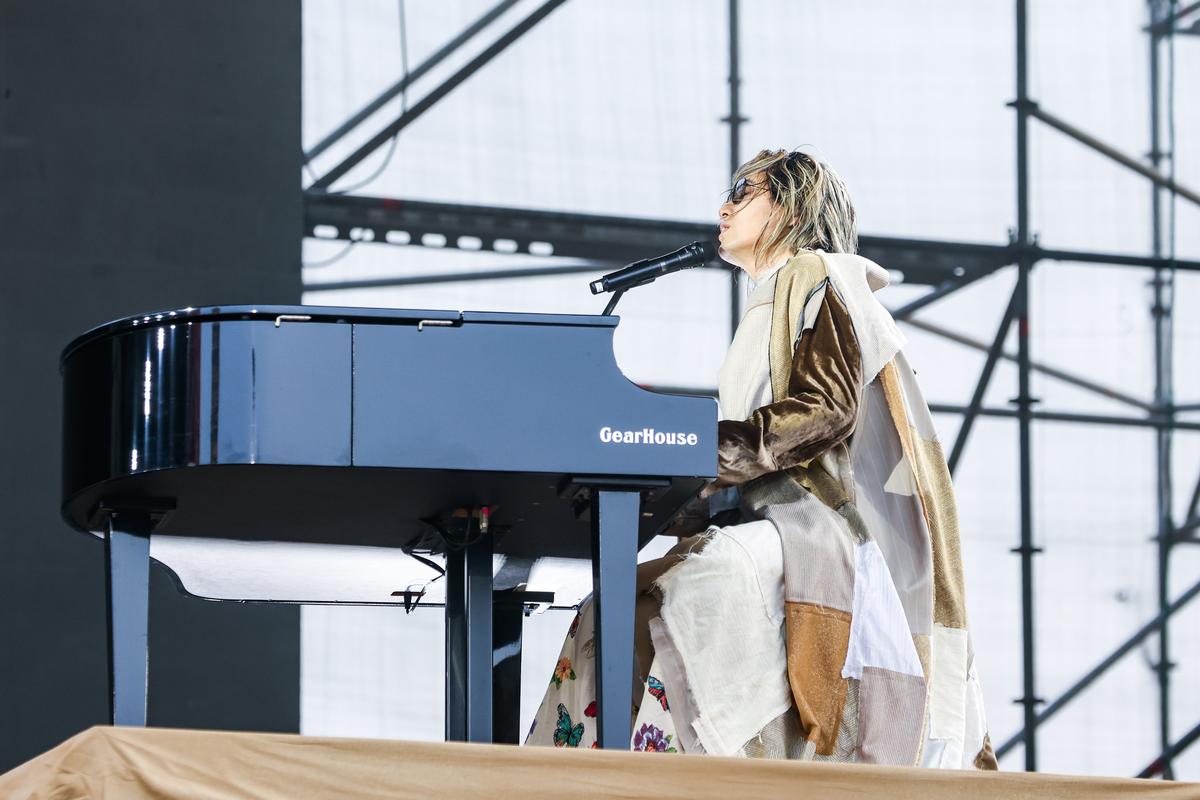
Fuji Kaze performs at Lollapalooza India 2026 at the Mahalaxmi Racecourse, Mumbai
| Photo Credit:
Special Arrangement
Because what followed demanded everything.
Shortly after Kaze wrapped his brief, graceful set, he slipped offstage to polite, appreciative applause as the sun finally gave up on the race course, dragging the sky down with it and plunging the grounds into a sudden, anticipatory darkness that felt like a cue for something feral and electric on the horizon.
What followed was an hour of jittery endurance that only people who have committed to spawn-camping a festival stage truly understand — that peculiar form of masochistic optimism where proximity to the stage is earned through stiff-legged attrition and the collective decision not to move an inch even when faced with dehydration. To keep morale from collapsing under the weight of standing still for too long, the crowd did what crowds do when left alone with their own anticipation: it started singing to itself. Bohemian Rhapsody broke out in uneven patches, Hotel California wandered in halfway through a verse, I Want It That Way appeared without shame, and even stray Linkin Park hooks floated through the air as if rehearsing the following night.
I had spoken to Dominic Harrison aka Yungblud days earlier, and that context kept replaying as the wait stretched on. Again and again, he returned to theatre, to danger, to the idea that rock and roll had lost some essential nerve when it stopped being mischievous and unruly, and to the pleasure of remaining unfinished.

All of that found its shape when the H&M stage finally dropped into monotone haze as the massive LED screens on either side began flashing the word hello in dozens of languages, black text slamming against white at a speed so fast it barely registered as language anymore. A familiar progression began to form, and the main screen cut to a live backstage feed of Dom, poised in the wings, cupping his hands around his ears with cheeky impatience, beckoning the crowd to finish summoning him. When the roar hit its peak, Yungblud exploded onto the stage in leather pants and a shirtless black half-vest, eyes already wild, and tore straight into Hello Heaven, Hello with an intensity that felt almost irresponsible. The light and sound design seemed engineered to overwhelm, the entire stage pulsing with strobing flashes at an absurd, almost hostile speed, instantly arresting and completely enveloping, though I couldn’t help briefly worrying about anyone with photosensitive epilepsy being fast-tracked to the afterlife he was so enthusiastically greeting.
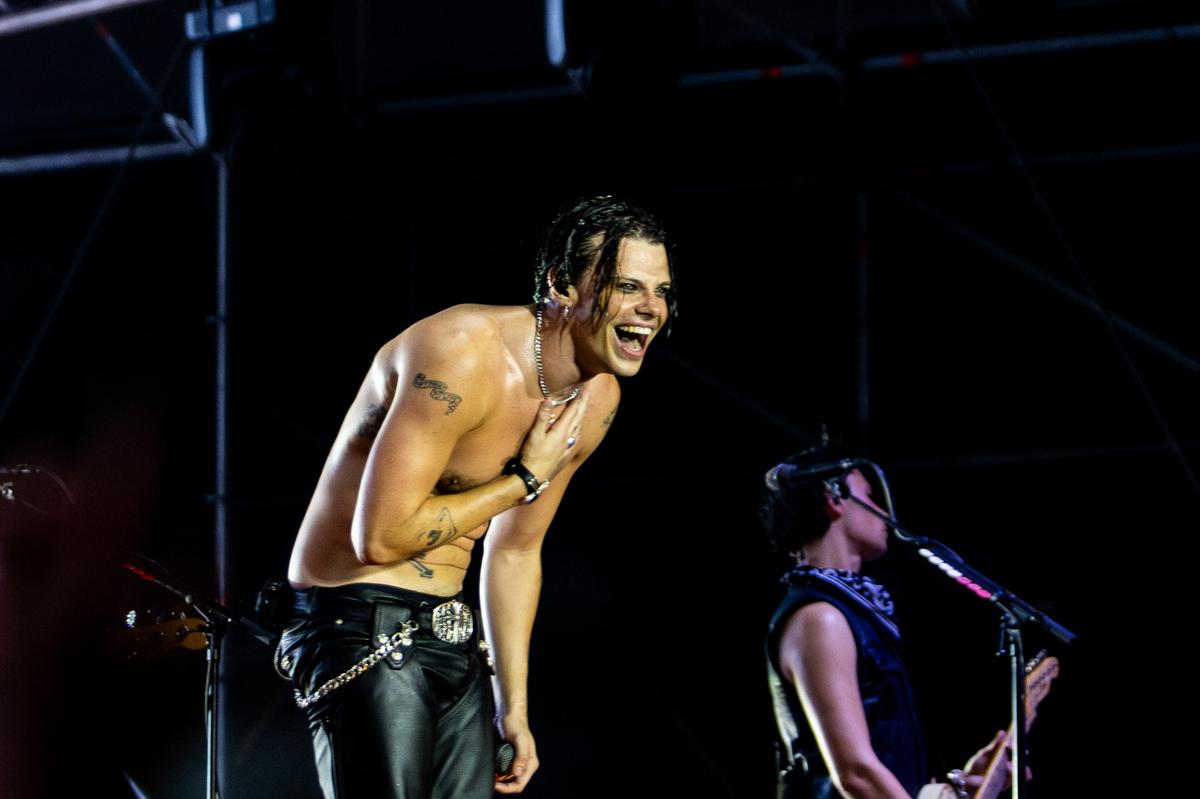
Yungblud thanks the crowd for the support at Lollapalooza India 2026 at the Mahalaxmi Racecourse, Mumbai
| Photo Credit:
Special Arrangement
As soon as the opener slammed shut, Yungblud grabbed the mic and screamed “INDIAAAAAAAAAAA!” with a grin of undisguised delight, ripped off his vest to reveal his fully shirtless, tattooed frame, poured an entire glass of beer over his own head, dramatically flipped his hair back, and drove forward without pause.
From that moment onward, the set became a sustained sprint, each song delivered with maximal theatrical commitment while his absurdly consistent, Axl Rose-adjacent voice remained clear, level, and unwavering. He played the crowd shamelessly, blew kisses, tugged his low-slung pants just enough to draw screams — the shadow of a young Freddie Mercury present in the posture and timing of his classic rock exhibitionism.
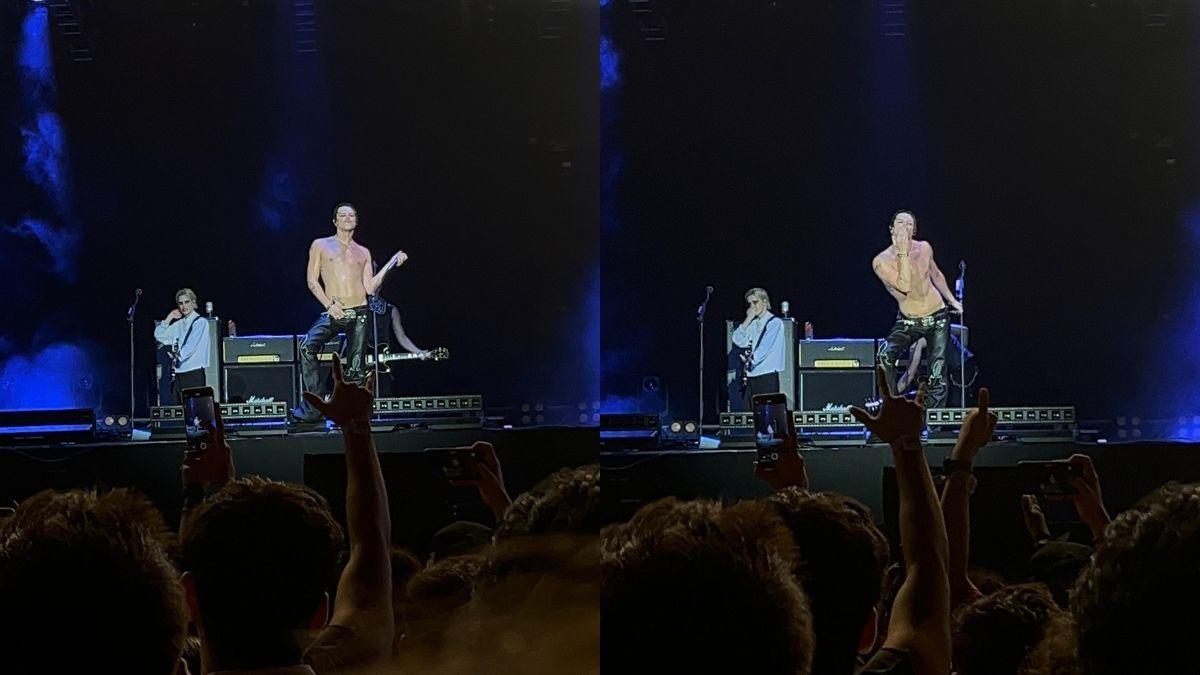
Yungblud showboats at Lollapalooza India 2026 at the Mahalaxmi Racecourse, Mumbai
| Photo Credit:
Kanak Kantor
But the real rupture came through his insistence on proximity. Spotting a handmade sign in the crowd, he pulled a young Mumbaikar onstage without hesitation, trusted him with a guitar, and performed fleabag alongside him with easy generosity. Minutes later, with alarming nonchalance, he announced, “I’m coming in,” and promptly vaulted the barricade, vanishing into the crowd as his security team visibly spiralled. People around me started shouting “HE’S INSIDE!” like eyewitnesses to a jailbreak, and then he reappeared barely twenty feet away, balanced on the shoulders of fans, finishing the song he’d started as if this were the most natural place to be. I’ve never seen that level of unfiltered affection and reckless intimacy between artist and audience without it tipping into chaos, and somehow it held.
Known for turning stages into sweat-soaked pressure cookers, the punk-rocker soon did something decidedly un-punk-rockby stopping entirely. In the sudden stillness, he asked, “Mumbai, do you mind if I dedicate the next song to a dear friend of mine in the sky tonight? This song belongs to Mr. Ozzy f***ing Osbourne,” before choosing his late mentor’s band Black Sabbath’s Changes over anything safer or louder.
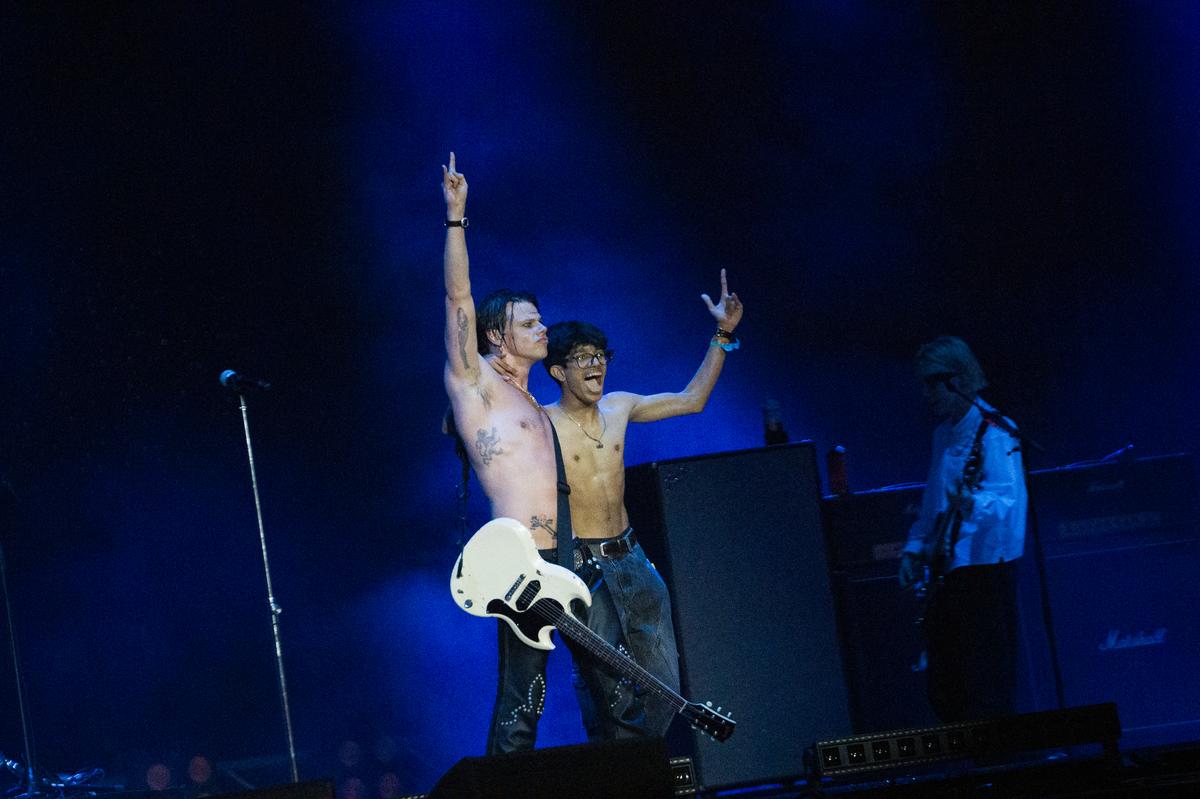
Yungblud invites a young Mumbaiker up on stage to play with him at Lollapalooza India 2026 at the Mahalaxmi Racecourse, Mumbai
| Photo Credit:
Special Arrangement
Later, he spoke about India again, about dreaming of playing here since he was five years old, and promising he would return every year for the rest of his life. The response was immediate and overwhelming, seventy thousand voices chanting his name in unison, loud enough to shake whatever composure he had left. The camera lingered on his face as the moment caught up to him, mouth twitching, eyes swelling, stunned into silence by the sheer scale of what he’d just set in motion.
After a brief false exit, Yungblud returned to the stage to chants demanding Zombie, and instead delivered two encores from his latest album Idols — Ghosts followed by Zombie — before diving back into the crowd once more, fans crying openly as they clung to him, kissed him, and refused to let the night end gently. Hours later, long after the lights had cooled, he posted a flood of photos and videos on Instagram, calling the show one of the greatest nights of his life and promising to return next year.
Walking away from the grounds that night, legs wrecked and ears still ringing, it was impossible to shake the sense that Day One had left the festival in a charged, unresolved state. That unfinished business had a name, and for a lot of us it had been patiently waiting its turn for most of our lives.
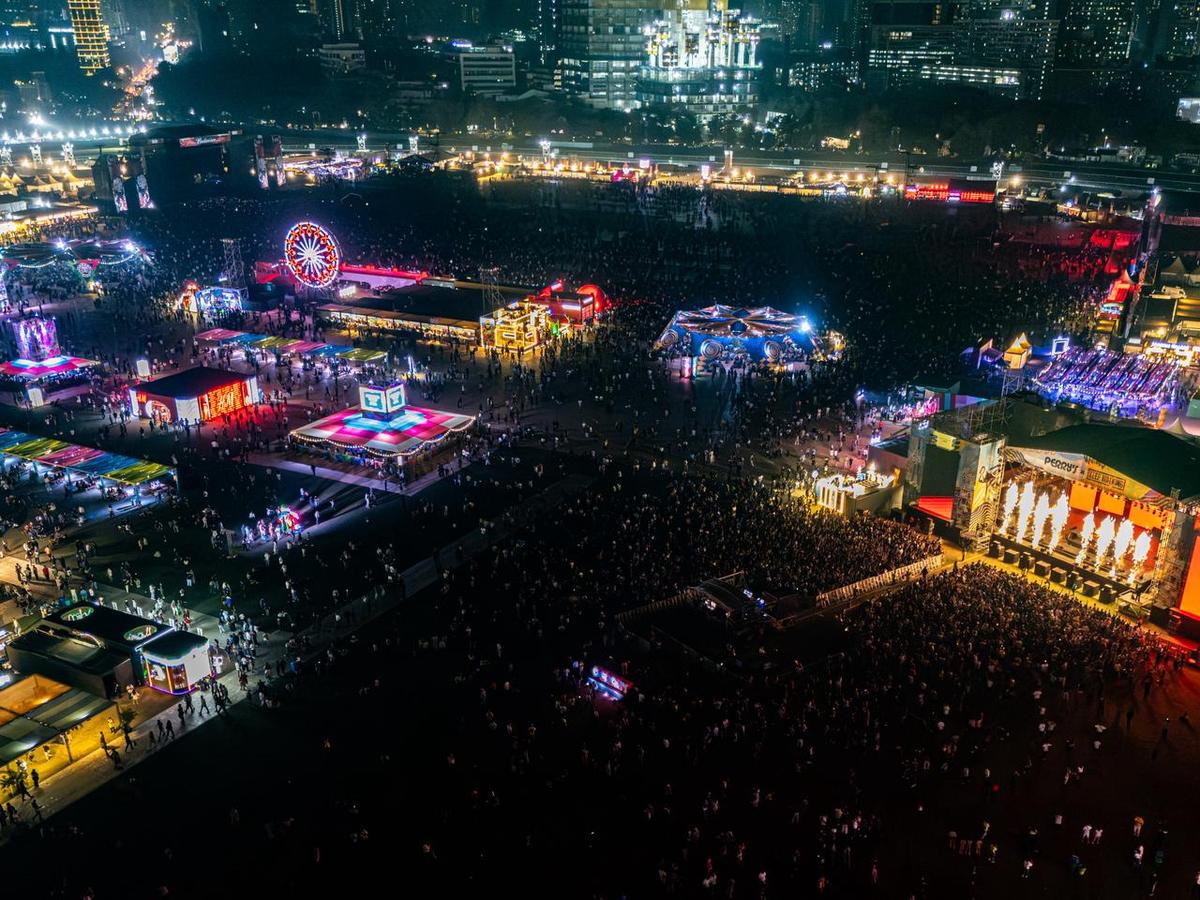
A bird’s-eye view of Lollapalooza India 2026 at the Mahalaxmi Racecourse, Mumbai
| Photo Credit:
Special Arrangement
Linkin Park hit at a hinge point where music, technology, and adolescence were all mid-mutation, and their durability comes from how precisely they mapped onto the way we learned to carry sound with us. Hybrid Theory moved the way music itself was moving — bought on CD, burned, ripped, pocketed — slipping from car stereos into headphones and hard drives until Linkin Park felt like a shared operating system for unresolved feelings. Their songs were built to travel, engineered for replay and spectacle, thriving on MTV countdowns, Transformers end credits, Call of Duty montages, anywhere intensity needed a soundtrack that knew when to detonate.Taken together, these threads explain why Linkin Park functions as such a reliable vessel for early-2000s nostalgia. Their catalogue became an audio shorthand for an adolescence that was at once homemade and cinematic.

Which is why Day Two at Lollapalooza India carried so much weight before a note was played. As evening settled over Mahalaxmi Racecourse, the crowd moving along the perimeter toward the main entry felt palpably larger than the day before, a swelling mass of anticipation shaped by years of waiting. Chester Bennington was everywhere without being named, printed across shirts, carried in signs and worn with affection. The sheer number of fans made it immediately clear that everyone had arrived with the same strategy, to claim ground early and hold it, and by the time Bloodywood took the Budweiser stage hours earlier, the crowd had already locked itself into place.
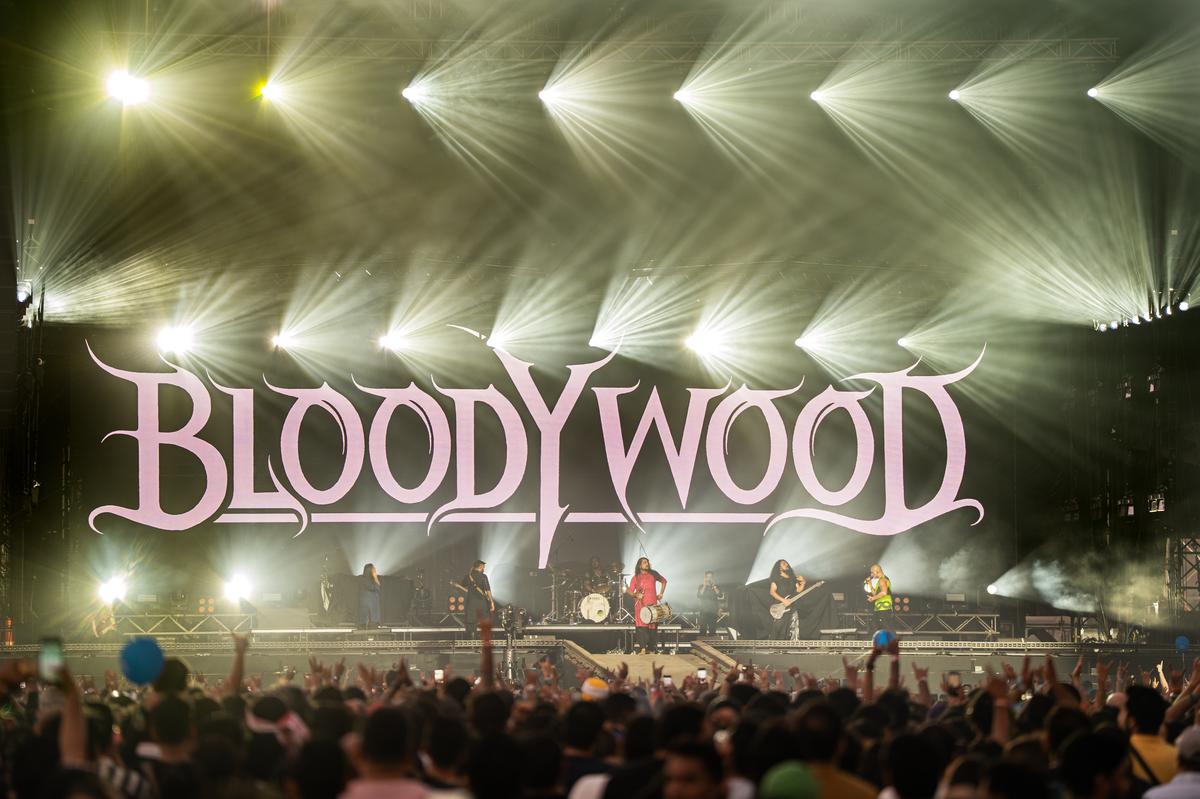
Bloodywood perform at Lollapalooza India 2026 at the Mahalaxmi Racecourse, Mumbai
| Photo Credit:
Special Arrangement
Getting closer was a matter of compromise rather than ambition. About fifty metres from the stage was the furthest we could push without risking asphyxiation or being folded into one of Bloodywood’s sudden, joyous mosh pits, which opened unpredictably and swallowed the unlucky whole. Their set primed the field without exhausting it, and once they cleared the stage, restlessness set in. The final stretch of waiting was brutal, backs aching, legs numb, bodies testing their limits. When the ten-minute countdown appeared on the side screens, people were visibly fraying, held upright by adrenaline and the knowledge that this moment had been deferred for most of their lives.
Then the stage lit up, swirling animations giving way to the faint, unmistakable shimmer of Castle of Glass, and the roar that followed was defeaning. A beat switch later, Somewhere I Belong took over as Mike Shinoda, Emily Armstrong, Joe Hahn, Dave Farrell, Brad Delson, and Colin Brittain stepped into view in the middle of thousands of voices crying, shouting, singing in unison. This was somewhere they belonged. This was somewhere we did too.
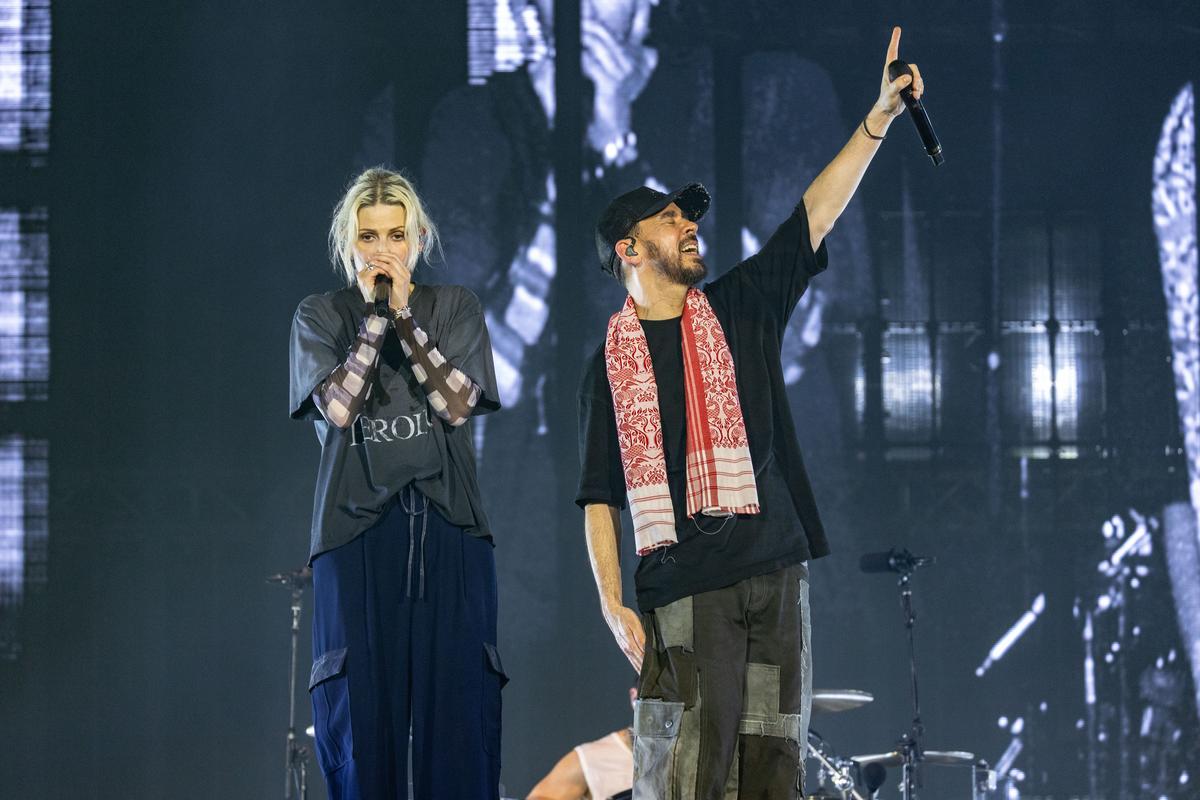
Linkin Park’s Emily Armstrong and Mike Shinoda perform at Lollapalooza India 2026 at the Mahalaxmi Racecourse, Mumbai
| Photo Credit:
Special Arrangement
The next two hours moved with a merciless confidence, the band threading its way through Hybrid Theory, Meteora, Minutes to Midnight, and From Zero, as if time were something they could fold rather than traverse, each era clicking into place. Finally getting to hear Emily Armstrong live recalibrated the set in real time, her voice wide and tensile, capable of brute force and sudden restraint, not borrowing authority from the catalogue so much as reinhabiting it on her own terms. Mike, visibly moved, thanked the crowd for waiting and for embracing the band’s new chapter with the same devotion as the old.
Every time one song bled into the next, my friend and I played a private, stupidly earnest game of reflex, taking microseconds to call the opening notes and turning ourselves into involuntary LP Shazams for the night. After an hour of screaming every borrowed teenage feeling into what amounted to a single drop in the Linkin Park megachoir, the unlikely 2010 detour Waiting for the End came out of nowhere and unexpectedly forced the moment to catch up with me — that simple, destabilising realisation of actually being at a Linkin Park show short-circuited whatever composure I had left, and I teared up instinctively.
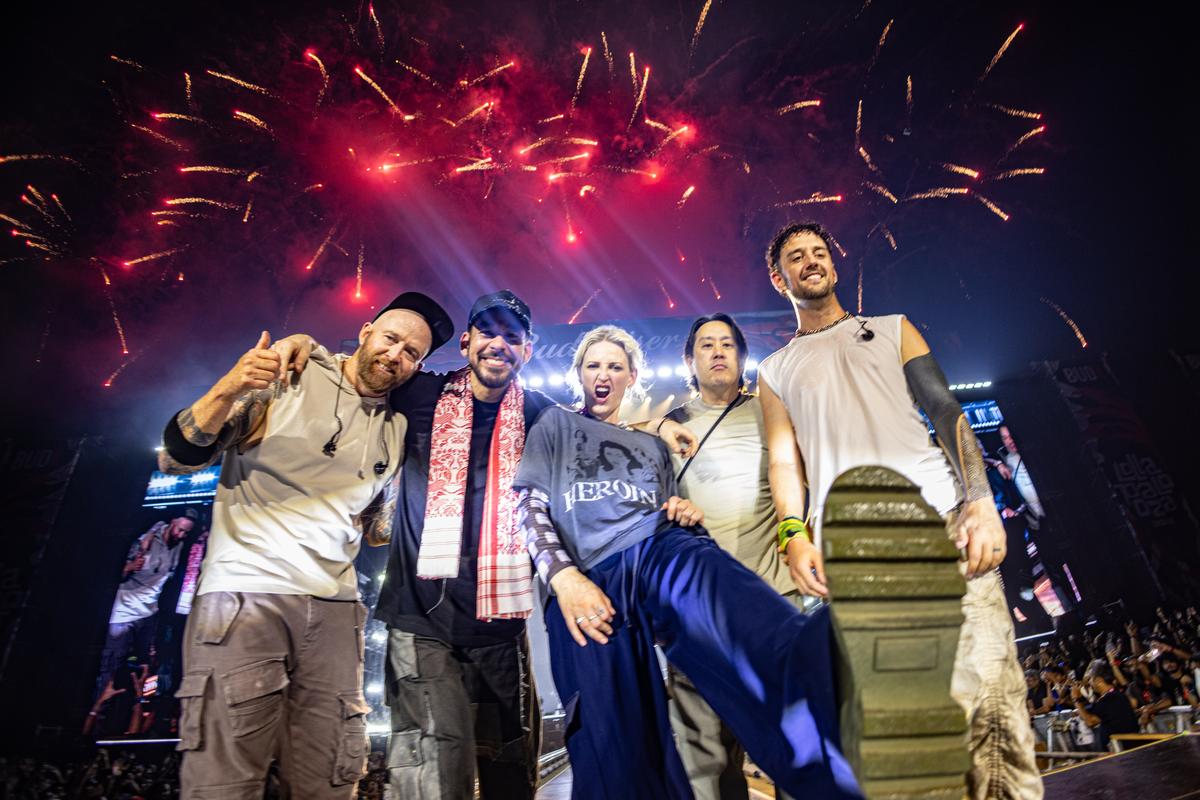
Linkin Park conclude their show at Lollapalooza India 2026 at the Mahalaxmi Racecourse, Mumbai
| Photo Credit:
Special Arrangement
Later, Mike stepped forward again, gifting his snapback to a newlywed couple who had ditched their honeymoon to be there, climbing the barricade to rap from closer range. While the set never dipped, a handful of songs hit with the kind of blunt-force authority that flattened the field outright — Up From the Bottom, The Catalyst, Lying From You, One Step Closer, Numb, Heavy Is the Crown, In the End — each one detonating on contact, bodies around me coming apart and reassembling in real time. And then, just when I’d made my uneasy peace with the possibility of personal heartbreak, Faint arrived at the very end like a perfectly timed mercy killing, my favourite Linkin Park song closing the show after I’d already emotionally prepared for its absence, pushing me right back to the edge in the most efficient way possible.
The band took their bow, offered their thanks, and let fireworks do the rest, with the night sealing itself shut with the decisiveness of a long-deferred promise finally kept.

Getting out was its own ordeal. Thousands of exhausted bodies shuffled toward the exits in slow, pained unison, some too spent to do more than drift, others openly fantasising about leg amputation as a viable medical solution. My feet throbbed, my legs felt like badly rented equipment, and none of it mattered. This was the kind of pain you carry gladly, because it comes attached to a memory you’re never giving back.
Lollapalooza India 2026 ran from January 24th to 25th. The event was produced and promoted by BookMyShow Live.