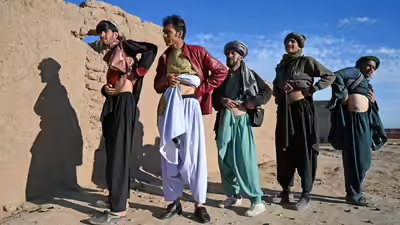
On the outskirts of Herat in western Afghanistan, one settlement drew international attention in 2022 after reports emerged that many residents had sold a kidney to survive deepening poverty and hunger. The area became widely known as the “one-kidney village,” a grim reflection of the humanitarian crisis that followed Afghanistan’s economic collapse after the Taliban returned to power. Families described selling organs to pay debts, buy food or cover medical expenses as international aid declined and unemployment surged across the country.
Why residents sold their kidneys
The reports surfaced during one of Afghanistan’s worst economic crises in recent history. Millions of Afghans were facing acute food insecurity, while many households had lost their primary sources of income.Residents interviewed by AFP at the time said kidney sales were driven by desperation rather than choice. Some parents said they underwent surgery simply to feed their children or avoid eviction. In several cases, multiple members of the same family had sold kidneys.
Afghanistan’s illegal organ trade
Although organ trading is illegal in Afghanistan, reports suggested that enforcement was weak and that underground kidney sales continued in parts of the country. Some donors reportedly received as little as $1,500 for a kidney, while buyers travelled to Herat for transplant procedures.Doctors and aid workers interviewed in 2022 said the number of operations had increased sharply during the economic collapse, drawing global attention to the issue.
The lasting human impact
For many donors, the financial relief lasted only briefly. Some later reported chronic pain, weakness and difficulty working after surgery. Others said they regretted the decision but felt they had no alternative at the time.The story of Afghanistan’s so-called “one-kidney village” became one of the clearest examples of how conflict, poverty and economic breakdown can push people toward extreme survival measures.